


Cataract and a simultaneous solution for astigmatism
The combination of cataract with astigmatism is fairly common. Astigmatism is very common before as well as after a cataract surgery. On average, one out of there people that are eligible for cataract surgery have at least 1.0 dioptres of astigmatism. This is sufficient to cause vision to be noticeably blurred without glasses or contact lenses. Modern intraocular surgery does not simply aim at the removal of cataract from the eye. What it aims at, is offering the greatest possible improvement of the functions of the eye. Residual astigmatism is directly linked to subsequent dependence of the patient on correction using glasses on all distances. As such it is undesirable. There are several options on how to resolve this:
Astigmatic keratotomy
One of the options is dealing with the astigmatism directly on the cornea during the cataract surgery. This is a suitable solution for astigmatism ideally within the range of up to ±1,5 dioptres. The most commonly used technique is the so-called astigmatic keratotomy (arcuate keratotomy – AK or limbal relaxing incisions – LRI). In such a case, the incisions into the cornea are usually performed using a diamond knife. Another alternative is femtosecond laser assisted arcuate keratotomy (FLAK). It makes use of femtosecond laser for precise formation of arcuate incisions within the central periphery of the cornea.
Final correction using laser (LASIK, PRK) or one of the forms of astigmatic keratotomy may be performed later on in time after the cataract surgery so as to eliminate any residual astigmatism.
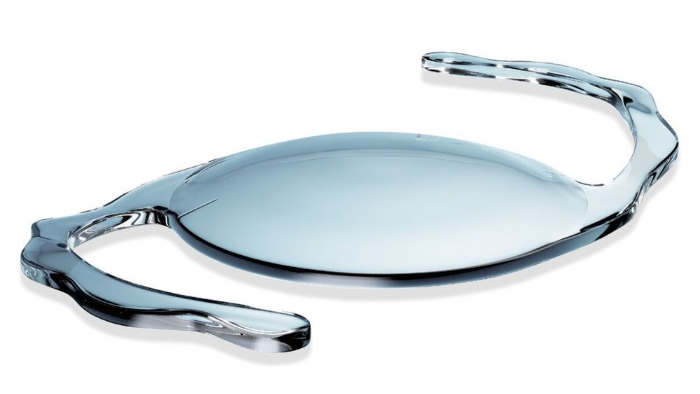
Toric lens Sulcoflex for the final correction of astigmatism
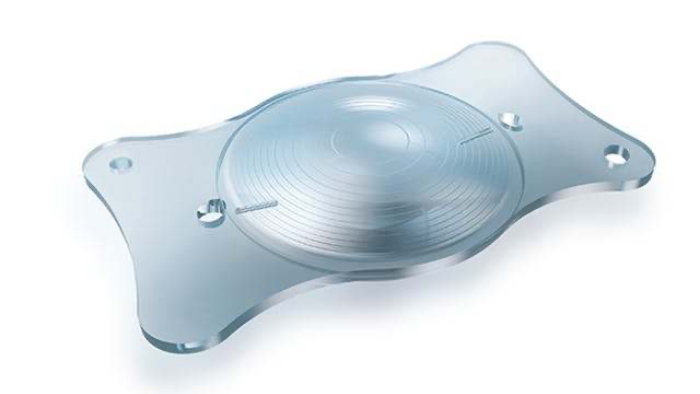
Toric multifocal lens At Lisa
Fill out the appointment form and we will get back to you with suggestions of an appointment.
Toric intraocular lenses
For higher forms of astigmatism there is also a solution. This is the implantation of a special intraocular lens (toric). In this way it is possible to predictably correct astigmatism during cataract surgery. Toric implants exist in monofocal as well as multifocal versions as well as the version EDOF.
Cataract surgery with implantation of toric lenses is almost identical to the cataract surgery using conventional lenses but there are several significant differences.
Prior to the surgery, measurements are made that assist the surgeon in selecting the optimal dioptre strength and the required orientation of the toric implant in the eye. This is done in such a way so as to correct the patient’s astigmatism as effectively as possible. Toric intraocular lenses have specific markings in the periphery of the optical part of the lens and these enable the surgeon to see, where exactly are the axis for correcting the astigmatism on the implant. As soon as the toric lens is implanted into the eye, the surgeon rotates it into the correct position (he marks this on the eye prior to the surgery). The astigmatism is thus corrected, and quality vision is achieved.
Using toric intraocular lenses during cataract surgery does not increase the risk of common complications. Only the wrong primary position of the lens or its rotation in the time after the surgery may cause blurred vision that is not easily corrected using glasses or contact lenses. In such a case it is necessary to re-operate and move the lens back into its correct position.