


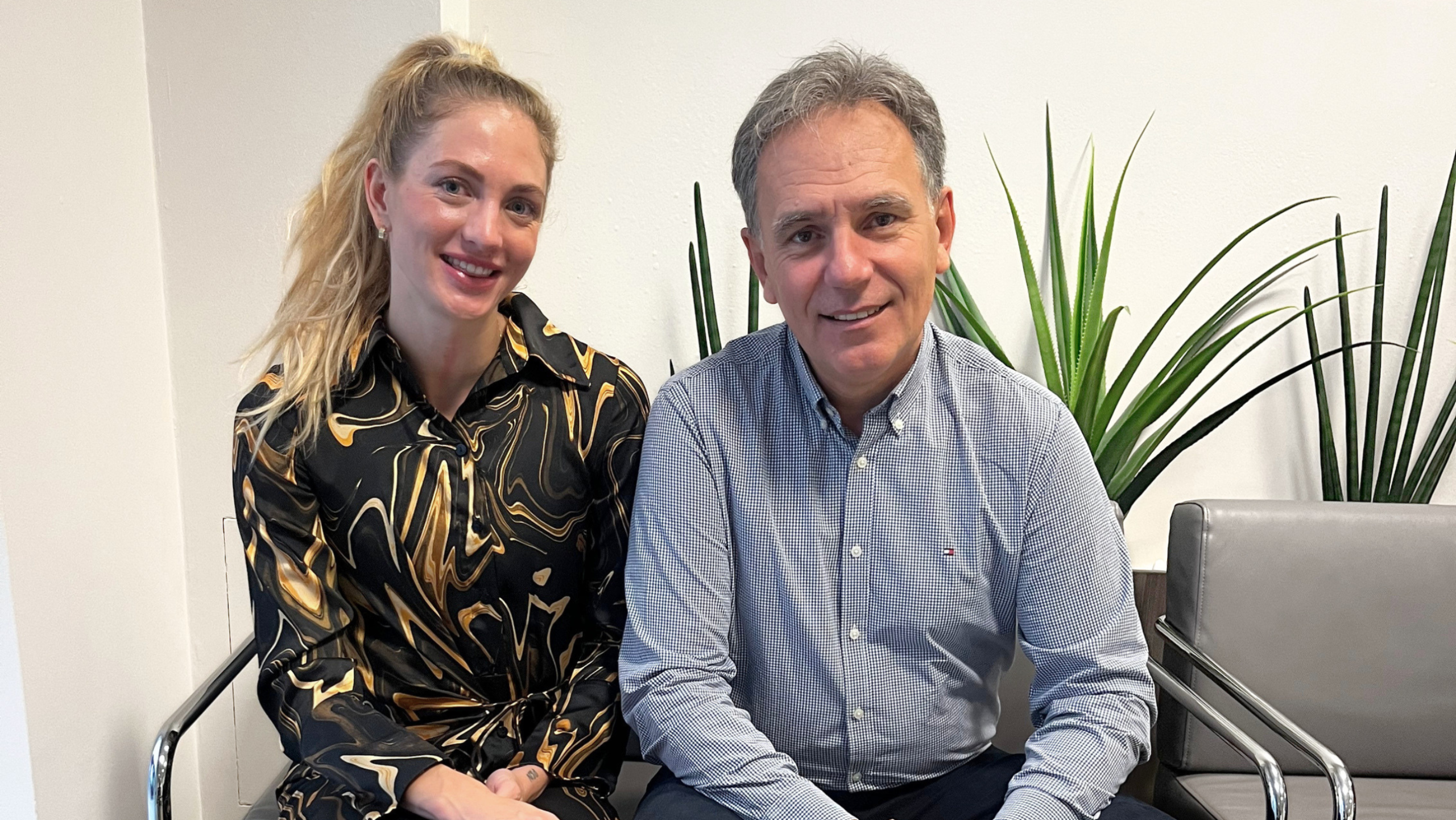
Nikoleta Jíchová is currently one of the most prominent figures in Czech athletics. She specialises in the 400-meter hurdles. It is a discipline that requires not only speed but also precision, concentration, and mental resilience. Recently she has gone through a challenging period because of a knee injury. For her, this forced her to slow down, reconnect with herself and alter her perception of her body and health. In this interview, she talks about her sporting goals, inner balance and also about the role that laser eye surgery played in her life.
You are one of the fastest Czechs athletes in the 400-metre hurdles. What does this discipline mean to you and why have you developed such a strong connection to it?
“Mostly I like how tough and demanding it is. Both physically and mentally. It’s the longest and most painful sprint that entails 10 hurdles that won’t budge. Even when I feel like I can’t possibly go on, I still must keep running and focusing on clearing the next hurdle.”
Recently you’ve been through a challenging period with an injured knee. Just how hard was it for you to slow down and focus on recovery? Did your perspective on sport, your body or your limits change at all as a result?
“An injury this serious inevitably taught me patience, forcing me to reassess my priorities in life and strengthening my willpower. During rehabilitation I met some interesting people who enriched me professionally as well as personally. Due to the injury, I also had time for things I normally don’t have the time for — like laser eye surgery. :-)”
What are your immediate sporting goals? Is there something you’re particularly looking forward to in the new season?
“My biggest goal at the moment is the European Athletics Championships in Birmingham this August.”
Professional sport must put you under a lot of pressure, like performance is all that matters. Where do you find calm and inner balance?
“I am very fond of Stoic philosophy, especially Marcus Aurelius. His thoughts resonate strongly with me. I also find peace in painting and art.”
At what point in time did you start to realise that your vision was limiting you in everyday life and in your sporting career?
“In the evenings, having removed my contact lenses, I often suffered from dry eyes. I also travel a lot so it would happen that I would forget my contact lens solution at home and then had to run around the hotel asking for it.”
Did you have any concerns before the procedure? What reassured you the most?
“Of course, I was worried about whether the operation would go well. The chief surgeon took his time to explain everything, preparing me for every step but it was his presence that gave me 100% confidence. In the end I was, in fact, looking forward to the procedure.”
Do you recall that moment when you realised, “Wow, I really see differently”? What was it like?
“First thing in the morning when I opened my eyes and my vision wasn’t blurry. A truly amazing feeling.”
What’s the most significant way in which the surgery changed your everyday life? Is there any particular, possibly even mundane moment (such as waking up or traveling) that you now enjoy more than you did before?
“As I already mentioned, it’s the mornings. Simply because there’s one less thing to deal with in my routine. Also, on long journeys when I can see clearly at night. On planes, I no longer suffer from dry eyes, and I have been spared from having to constantly look for my glasses.”
Do you notice an improvement in sport as well? Perhaps in your confidence, spatial awareness, focus?
“Before the surgery, whenever I would look at one point for too long while wearing my contact lenses, I had to blink several times afterwards. That no longer bothers me.”
Taking care of one’s body as an elite athlete is a given. What’s your approach to your health in general?
“It’s all about discipline. Health is of utmost importance. Without it you can’t perform — let alone at an elite level. I am mindful of staying well hydrated. I eat well. I understand the importance of recovery, and I regularly go for blood tests.”
Many people fear laser eye surgery. Is there anything you would like to say to anyone considering it but still hesitating?
“Fear is natural. Our eyes are extremely important. The most important thing is choosing the right clinic and staff. I was very lucky to have found a place where a professional environment and an amazing team are an equally important part of the equation. The pleasant atmosphere combined with a personal yet highly professional approach left me not only with perfect vision but also with a beautiful memory.”